Device connectivity at scale
Distribute MQTT connections across a cluster as your device fleet and IoT services grow.
EMQX FOR TELECOM
Launch and scale next-generation 5G IoT services with reliable MQTT connectivity for millions of devices.
Why MQTT
Build a unified messaging layer for connected devices and IoT services across your network.
Distribute MQTT connections across a cluster as your device fleet and IoT services grow.
Filter, transform, and route device events to monitoring, analytics, and service applications.
Bring compatible device and gateway data into MQTT for distribution to telecom and enterprise systems.
Architecture
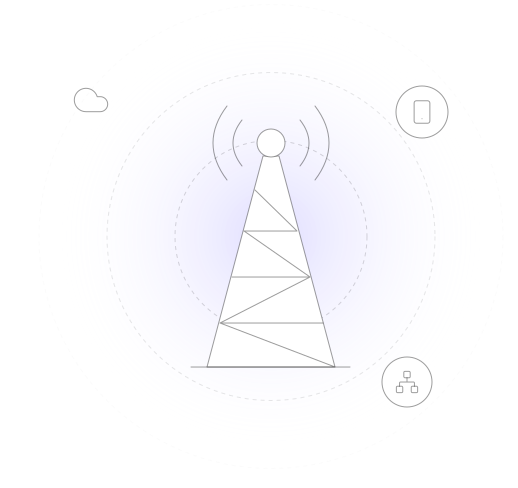
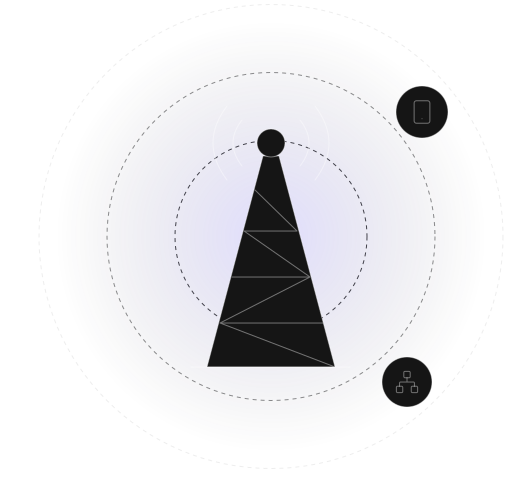
See how EMQX connects network infrastructure, 5G IoT devices, and backend services through a central MQTT data hub.
EMQX Enterprise
Real-time MQTT
Capabilities
Connect devices, control data access, and route events to the applications behind your telecom IoT services.
Connect MQTT clients and configured protocol gateways. Use industrial gateways for equipment protocols such as OPC UA and Modbus.
Protocol gateway guidePublish device events once and distribute them to authorized subscribers and backend systems.
MQTT messaging guideDistribute connections across broker nodes and configure delivery and session settings for each service.
Cluster deployment guideUse TLS, client authentication, and topic permissions to protect device and application communication.
Authorization guideUse SQL-based rules and supported connectors to route IoT events to databases, streaming platforms, and cloud services.
Data integration guidePlace gateways and processing near devices, with broker deployments suited to your network and data requirements.
Deployment guideUSE CASES
Use device and network data to optimize operations, improve connected services, and uncover customer insights.
Route operational measurements and device events to applications that analyze network performance and plan improvements.
Feed device status and operational events to monitoring systems for service visibility and issue investigation.
Connect infrastructure sensors and gateways with applications for utilities, mobility, and city operations.
Deliver vehicle telemetry, diagnostic events, and OTA rollout status to backend applications over MQTT.
Connect industrial gateways to enterprise applications for equipment monitoring and production data analysis.
Supply device and interaction events to analytics applications that improve service support and customer experiences.
Customer story
Learn how China Telecom, one of the world's largest telecom providers, uses EMQX to power their national IoT platform, supporting over 100 million concurrent device connections for a wide range of smart services across their 5G infrastructure.
Read the case studyResources
FAQ
MQTT is an application messaging protocol that runs over IP networks, including 5G. It connects devices with services through compact publish-subscribe messages.
EMQX distributes device connections and message routing across a cluster. Size and test your deployment for expected connections, event rates, payloads, and subscriber fan-out.
Use supported connectors to route events to databases, Kafka, and other backend services. An application adapter may be needed for proprietary OSS/BSS interfaces and data models.
EMQX supports TLS encryption, client authentication, and topic-level authorization. Use certificates, passwords, or JWTs to verify devices and control which topics each client can publish or subscribe to.
EMQX supports MQTT over QUIC for fast reconnection and connection migration, and MQTT Streams for durable message storage and replay after interruptions. MQTT bridges in EMQX Edge can cache messages locally during outages and resend them when the upstream connection returns. Together, these capabilities help 5G IoT services recover from intermittent connectivity. Configure stream retention, bridge caching, and retry settings to match your service requirements.
Plan IoT connectivity, event routing, and telecom system integration with an EMQX expert.