%20scale(1.1)'%20stroke-width='1.1'%3e%3cpath%20d='M12%205a3%203%200%201%200-5.997.125a4%204%200%200%200-2.526%205.77a4%204%200%200%200%20.556%206.588A4%204%200%201%200%2012%2018Z'/%3e%3cpath%20d='M9%2013a4.5%204.5%200%200%200%203-4M12%2013h4M12%2018h6a2%202%200%200%201%202%202v1M12%208h8M16%208V5a2%202%200%200%201%202-2'/%3e%3ccircle%20cx='16'%20cy='13'%20r='.8'%20fill='white'/%3e%3ccircle%20cx='18'%20cy='3'%20r='.8'%20fill='white'/%3e%3ccircle%20cx='20'%20cy='21'%20r='.8'%20fill='white'/%3e%3ccircle%20cx='20'%20cy='8'%20r='.8'%20fill='white'/%3e%3c/g%3e%3crect%20x='511'%20y='51'%20width='40'%20height='40'%20rx='11'%20fill='%235E4EFF'%20fill-opacity='.012'/%3e%3cpath%20d='m523%2064%2016%202-6%2015-10-17Z'/%3e%3ccircle%20cx='523'%20cy='64'%20r='3'%20fill='white'/%3e%3ccircle%20cx='539'%20cy='66'%20r='3'%20fill='white'/%3e%3ccircle%20cx='533'%20cy='81'%20r='3'%20fill='white'/%3e%3ccircle%20cx='517'%20cy='335'%20r='13'/%3e%3cpath%20d='m512%20335%205-5%205%205-5%205-5-5Z'/%3e%3c!--%20A%20simplified%20robot%20endpoint.%20--%3e%3crect%20x='14'%20y='336'%20width='30'%20height='22'%20rx='6'/%3e%3crect%20x='8'%20y='343'%20width='6'%20height='9'%20rx='2'/%3e%3crect%20x='44'%20y='343'%20width='6'%20height='9'%20rx='2'/%3e%3cpath%20d='M29%20336v-7M24%20351h10M26%20358v4M32%20358v4'/%3e%3ccircle%20cx='29'%20cy='327'%20r='2'/%3e%3ccircle%20cx='22'%20cy='344'%20r='1.8'/%3e%3ccircle%20cx='36'%20cy='344'%20r='1.8'/%3e%3crect%20x='21'%20y='362'%20width='16'%20height='12'%20rx='3'/%3e%3cpath%20d='M21%20366h-5v6M37%20366h5v6M25%20374v5M33%20374v5'/%3e%3c/g%3e%3cg%20stroke-opacity='.1'%20fill='white'%3e%3ccircle%20cx='150'%20cy='86'%20r='2.5'/%3e%3ccircle%20cx='64'%20cy='144'%20r='2.5'/%3e%3ccircle%20cx='492'%20cy='135'%20r='2.5'/%3e%3ccircle%20cx='442'%20cy='354'%20r='2.5'/%3e%3ccircle%20cx='113'%20cy='389'%20r='2.5'/%3e%3c/g%3e%3c/g%3e%3c/svg%3e)
%20scale(1.1)'%20stroke-width='1.1'%3e%3cpath%20d='M12%205a3%203%200%201%200-5.997.125a4%204%200%200%200-2.526%205.77a4%204%200%200%200%20.556%206.588A4%204%200%201%200%2012%2018Z'/%3e%3cpath%20d='M9%2013a4.5%204.5%200%200%200%203-4M12%2013h4M12%2018h6a2%202%200%200%201%202%202v1M12%208h8M16%208V5a2%202%200%200%201%202-2'/%3e%3ccircle%20cx='16'%20cy='13'%20r='.8'%20fill='%23151515'/%3e%3ccircle%20cx='18'%20cy='3'%20r='.8'%20fill='%23151515'/%3e%3ccircle%20cx='20'%20cy='21'%20r='.8'%20fill='%23151515'/%3e%3ccircle%20cx='20'%20cy='8'%20r='.8'%20fill='%23151515'/%3e%3c/g%3e%3crect%20x='511'%20y='51'%20width='40'%20height='40'%20rx='11'%20fill='%23978AFF'%20fill-opacity='.012'/%3e%3cpath%20d='m523%2064%2016%202-6%2015-10-17Z'/%3e%3ccircle%20cx='523'%20cy='64'%20r='3'%20fill='%23151515'/%3e%3ccircle%20cx='539'%20cy='66'%20r='3'%20fill='%23151515'/%3e%3ccircle%20cx='533'%20cy='81'%20r='3'%20fill='%23151515'/%3e%3ccircle%20cx='517'%20cy='335'%20r='13'/%3e%3cpath%20d='m512%20335%205-5%205%205-5%205-5-5Z'/%3e%3c!--%20A%20simplified%20robot%20endpoint.%20--%3e%3crect%20x='14'%20y='336'%20width='30'%20height='22'%20rx='6'/%3e%3crect%20x='8'%20y='343'%20width='6'%20height='9'%20rx='2'/%3e%3crect%20x='44'%20y='343'%20width='6'%20height='9'%20rx='2'/%3e%3cpath%20d='M29%20336v-7M24%20351h10M26%20358v4M32%20358v4'/%3e%3ccircle%20cx='29'%20cy='327'%20r='2'/%3e%3ccircle%20cx='22'%20cy='344'%20r='1.8'/%3e%3ccircle%20cx='36'%20cy='344'%20r='1.8'/%3e%3crect%20x='21'%20y='362'%20width='16'%20height='12'%20rx='3'/%3e%3cpath%20d='M21%20366h-5v6M37%20366h5v6M25%20374v5M33%20374v5'/%3e%3c/g%3e%3cg%20stroke-opacity='.1'%20fill='%23151515'%3e%3ccircle%20cx='150'%20cy='86'%20r='2.5'/%3e%3ccircle%20cx='64'%20cy='144'%20r='2.5'/%3e%3ccircle%20cx='492'%20cy='135'%20r='2.5'/%3e%3ccircle%20cx='442'%20cy='354'%20r='2.5'/%3e%3ccircle%20cx='113'%20cy='389'%20r='2.5'/%3e%3c/g%3e%3c/g%3e%3c/svg%3e)
AI AGENT COMMUNICATION
MCP over MQTT
Connect AI agents to remote tools and services over MQTT, with service discovery through the broker.
NEXT-GEN PROTOCOL
Connect AI and IoT with MQTT, from autonomous vehicles and smart manufacturing to robotics.
AI AGENT COMMUNICATION
Connect AI agents to remote tools and services over MQTT, with service discovery through the broker.
AGENT-TO-AGENT INTEROP
Enable AI agents to discover each other, exchange requests and replies, and share events over MQTT.
MOBILE CONNECTIVITY
Reliable connectivity for mobile devices and unstable networks, with fast session resumption.
REAL-TIME DATABUS
Real-time messaging bus for robotics, industrial automation, and autonomous driving.
BUILT-IN DATA STREAMING
Native support for durable data stream storage and replay within the MQTT broker.
HIGH-THROUGHPUT MESSAGING
Pack multiple messages into a single MQTT 5.0 PUBLISH to reduce overhead and boost throughput.
MQTT Agent turns EMQX into a native AI execution runtime, allowing you to build, deploy, and secure autonomous agents directly inside your MQTT broker using nothing more than an LLM API key.
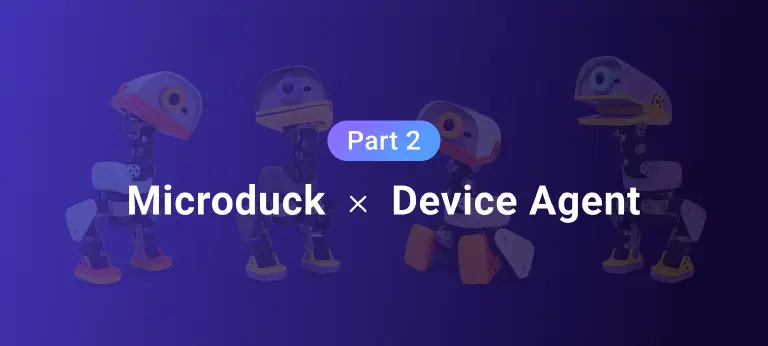
This article connects the Microduck robot in the MuJoCo simulator to Device Agent, using a DeviceSpec to describe its commands, properties and events. Users can then make the robot walk, turn and kick a ball with text or voice commands, and automate those actions with workflows and scheduled tasks.
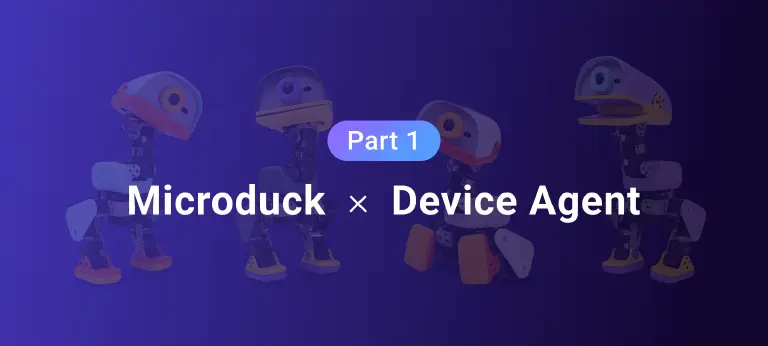
Learn how to control the Microduck robot with MQTT and MuJoCo, and explore Device Agent for LLM-powered edge-cloud robotics and natural-language control.
MQTT for AI is a set of MQTT enhancements that connect AI agents, devices, and services. Key capabilities include:
MCP over MQTT uses MQTT to connect AI agents with remote tools and services through the Model Context Protocol. It supports service discovery and scalable communication across IoT, edge, and cloud environments.
MQTT streams add data stream storage and replay to MQTT. Applications can read past messages from a chosen point to catch up after downtime or reprocess data.
MQTT queues in EMQX store messages for later delivery, even when consumers are offline. They distribute messages among available consumers and remove each message after acknowledgment, supporting asynchronous tasks and device commands.
MQTT batch publishing packs multiple messages into a single MQTT 5.0 PUBLISH packet. It reduces protocol overhead and improves throughput for applications that send many small messages.
An MQTT subscription filter adds conditions on message properties beyond topic matching. The broker delivers only messages that meet those conditions, reducing network traffic and processing on the subscriber.