EMQX 6.1.0 Released: Replayable MQTT Streams, Advanced Multi-Tenancy, and Expanded Integrations
EMQX 6.1.0 brings MQTT Streams for replayable messaging, enhanced multi-tenancy, and expanded data integration for enterprise-scale IoT.

EMQX 6.1.0 brings MQTT Streams for replayable messaging, enhanced multi-tenancy, and expanded data integration for enterprise-scale IoT.


In this article, we will describe how to design the topic of MQTT messages in the process of building the TSP platform of IoV.

MQTT Topic Alias allows users to reduce the possibly long and repeatedly used topic name to a 2-byte integer, so as to reduce the bandwidth consumption when publishing messages.

This article introduces the MQTT protocol and its advantages, and demonstrates the use of MQTT in Elixir.

This article sorts out some popular free online MQTT brokers, which we hope will provide a reference for your choice.

User Properties are the user-defined properties that allow users to add their metadata to MQTT messages to expand more application scenarios.

This article will give you a quick overview of the basic usage of the MQTTLens, as well as the basic concepts and usage of the MQTT protocol.

This article introduces MQTT sessions and provisioning an HAProxy load balancer in front of the EMQX cluster to take full advantage of the sticky-session load balancing.

This post gives a quick introduction for MQTT message broking, the challenges of clustering, and then load balancing.

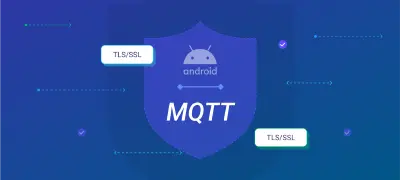
This article mainly introduces how to perform TLS/SSL one-way and two-way authentication via Android and MQTT.

We will demonstrate how to use the Python MQTT asynchronous framework - HBMQTT to implement an asynchronous program quickly.

MQTT 5.0 adds a new feature enhanced authentication, which includes query/response style authentication can implement bi-directional authentication of the client and broker.

MQTT 5.0 brings many new features, this article will give an introduction to the use of the new feature "flow control" in an easy-to-understand way.