Top 3 MQTT WebSocket Clients for Developers in 2025

Introduction
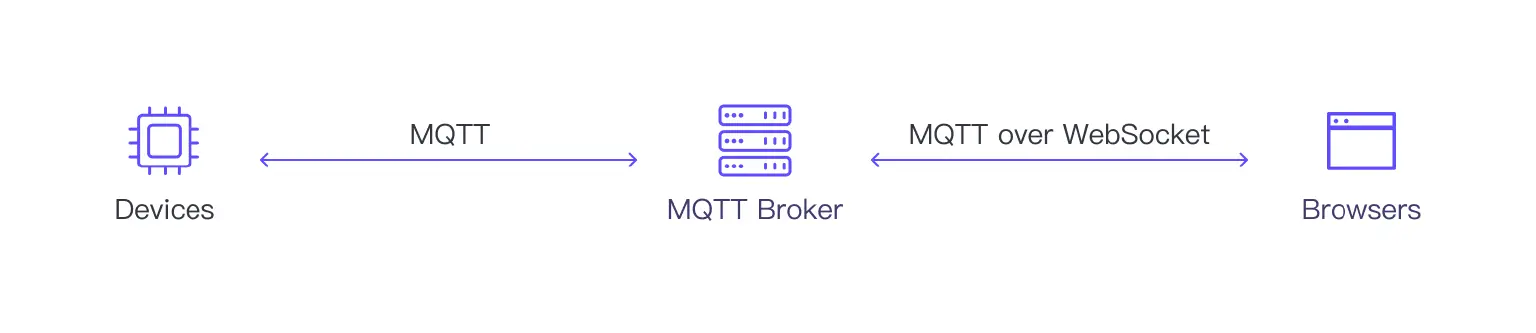
MQTT over WebSocket is a powerful combination for building real-time applications, especially for the Internet of Things (IoT). To debug and develop these applications efficiently, having the right MQTT WebSocket client is essential.
This blog post will explore the top 3 MQTT WebSocket client tools highly recommended in 2025.
Using a Free MQTT Broker for Testing
Before diving into the client tools, you need an MQTT broker that supports WebSocket to communicate and test with. A free MQTT broker is an ideal starting point for developers.
You can use the free public MQTT broker provided by EMQX at broker.emqx.io. This service is perfect for learning and testing, offering a public endpoint without any setup.
MQTT Broker Info
- Server: broker.emqx.io
- TCP Port: 1883
- WebSocket Port: 8083
- SSL/TLS Port: 8883
- Secure WebSocket Port: 8084
For more information, please check out: Free Public MQTT Broker
EMQX Cloud Serverless also provides a forever free MQTT broker with a generous free quota of 1 million session minutes per month. It's an excellent option for prototyping and small projects, as it offers a managed, scalable service without the hassle of self-hosting.
1. MQTT.js
MQTT.js is an MQTT client library written in JavaScript and designed to run in both node.js and browser environments. It fully supports MQTT protocol versions 3.1.1 and 5.0, as well as TCP, TLS, and WebSocket transports.
MQTT.js is a simple and lightweight library that allows developers to easily connect to MQTT brokers and publish/subscribe to MQTT topics via WebSockets.
Additionally, MQTT.js provides good documentation and community support, making it easy for developers to get started and resolve any issues they may encounter.
GitHub Project: https://github.com/mqttjs/MQTT.js/
Features
- MQTT v3.1.1 and v5.0 support
- TCP, TLS/SSL, and WebSocket support
- Automatic topic alias
- Auto reconnection
- Messages buffer
Installation
npm install mqtt -g
Usage Example
Here is an example of connecting to the free public broker via MQTT over WebSocket, subscribing to an MQTT topic, and sending and receiving messages.
const mqtt = require('mqtt');

// MQTT broker configuration
const brokerUrl = 'ws://broker.emqx.io:8083/mqtt';
const options = {
  keepalive: 60,
  clientId: 'mqttjs_' + Math.random().toString(16).substring(2, 10),
  protocolId: 'MQTT',
  protocolVersion: 5,
  clean: true,
  reconnectPeriod: 1000,
  connectTimeout: 30 * 1000,
};

// Connect to MQTT broker
const client = mqtt.connect(brokerUrl, options);

// Handle connection success
client.on('connect', function () {
  console.log('Connected to MQTT broker successfully');

  // Subscribe to a topic
  const topic = 'test/topic';
  client.subscribe(topic, { qos: 1 }, function (err, granted) {
    if (err) {
      console.error('Failed to subscribe:', err);
      return;
    }
    console.log('Subscribed to topic:', granted[0].topic);

    // Publish a message after successful subscription
    const message = 'Hello MQTT over WebSocket!';
    client.publish(topic, message, { qos: 1 }, function (err) {
      if (err) {
        console.error('Failed to publish message:', err);
      } else {
        console.log('Message published:', message);
      }
    });
  });
});

// Handle incoming messages
client.on('message', function (topic, message, packet) {
  console.log('Received message:');
  console.log('Topic:', topic);
  console.log('Message:', message.toString());
  console.log('QoS:', packet.qos);

  // Gracefully disconnect after receiving message
  setTimeout(() => {
    client.end(false, () => {
      console.log('Disconnected from MQTT broker');
    });
  }, 1000);
});

// Handle connection errors
client.on('error', function (error) {
  console.error('Connection error:', error);
});

// Handle reconnection
client.on('reconnect', function () {
  console.log('Attempting to reconnect...');
});

// Handle connection close
client.on('close', function () {
  console.log('Connection closed');
});
2. MQTTX Web
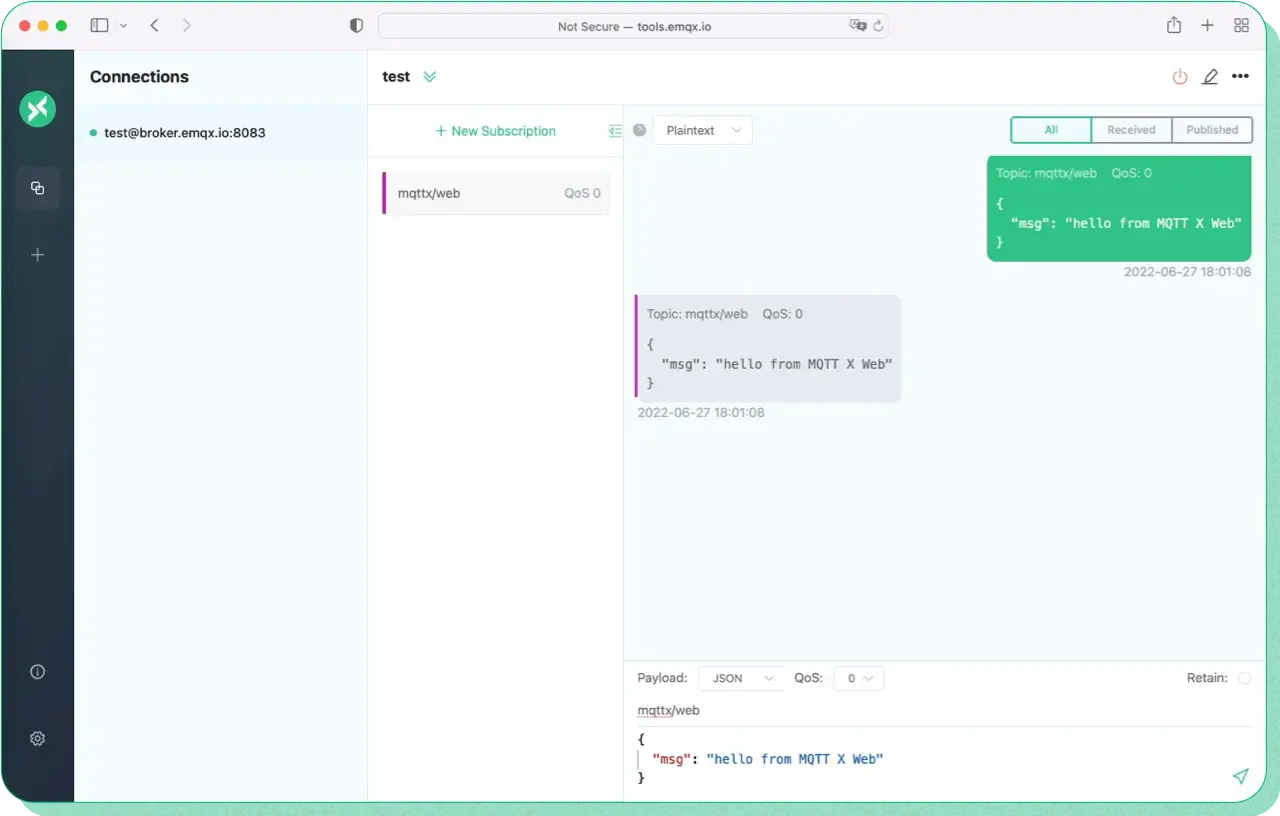
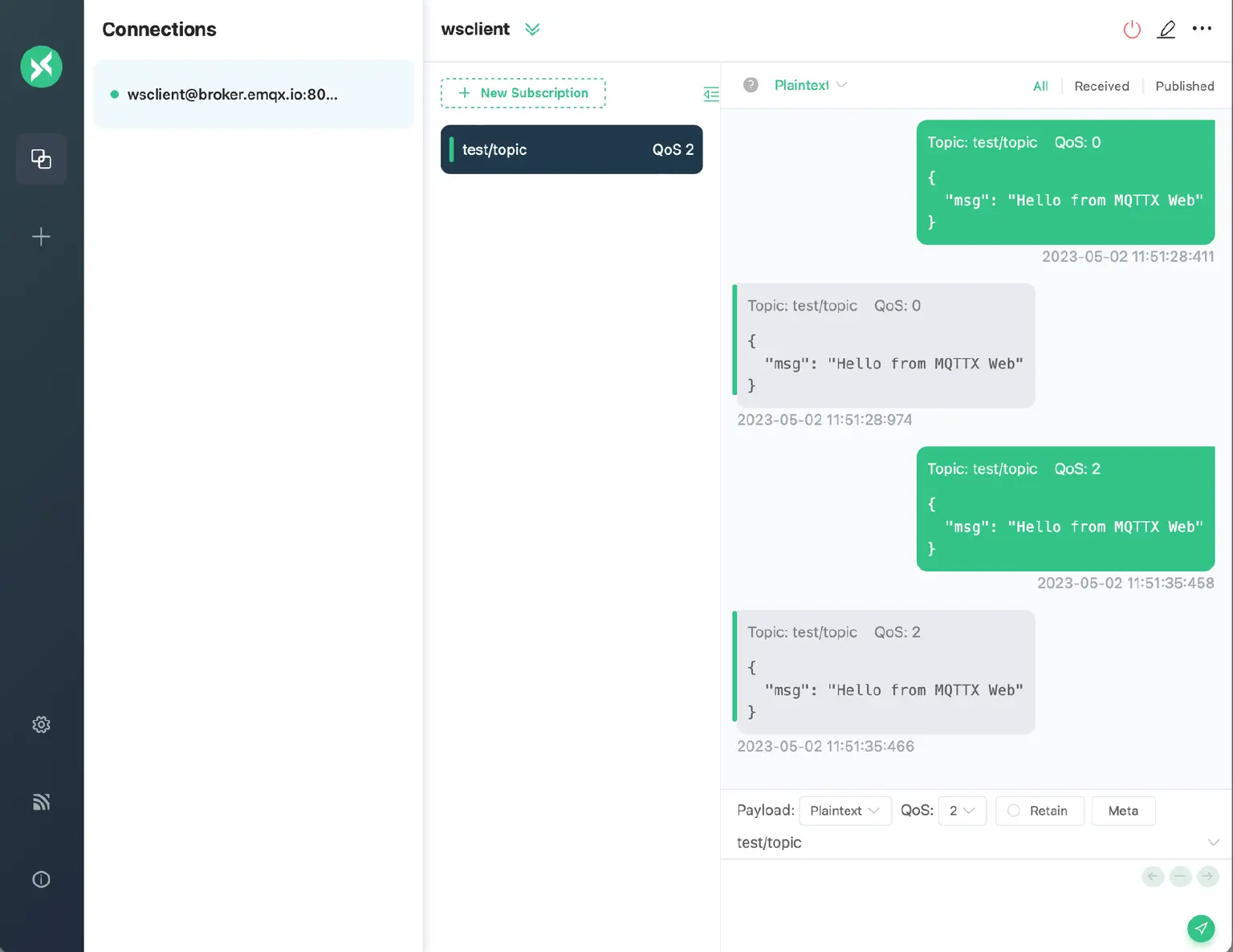
MQTTX Web is a user-friendly, browser-based tool for online debugging, developing, and testing MQTT applications. It connects to an MQTT broker via a WebSocket client and offers an intuitive interface.
Developed by the EMQX team, MQTTX Web is an open-source tool that supports MQTT 3.1.1 and MQTT 5.0 protocols and WebSocket transports. It is licensed under Apache Version 2.0.
Free Online MQTTX Web: https://mqttx.app/web-client/
Official Website: https://mqttx.app/web
GitHub Project: https://github.com/emqx/MQTTX/tree/main/web
Features
- User-friendly interface for beginners and advanced users
- Browser-based, no need to download and install
- Chatbox UI for sending/receiving MQTT messages
- MQTT v3.1.1 and MQTT v5.0 support
- MQTT over WebSocket support
- Using Docker for local deployment
Usage Example
- Open MQTTX Web using your web browser.
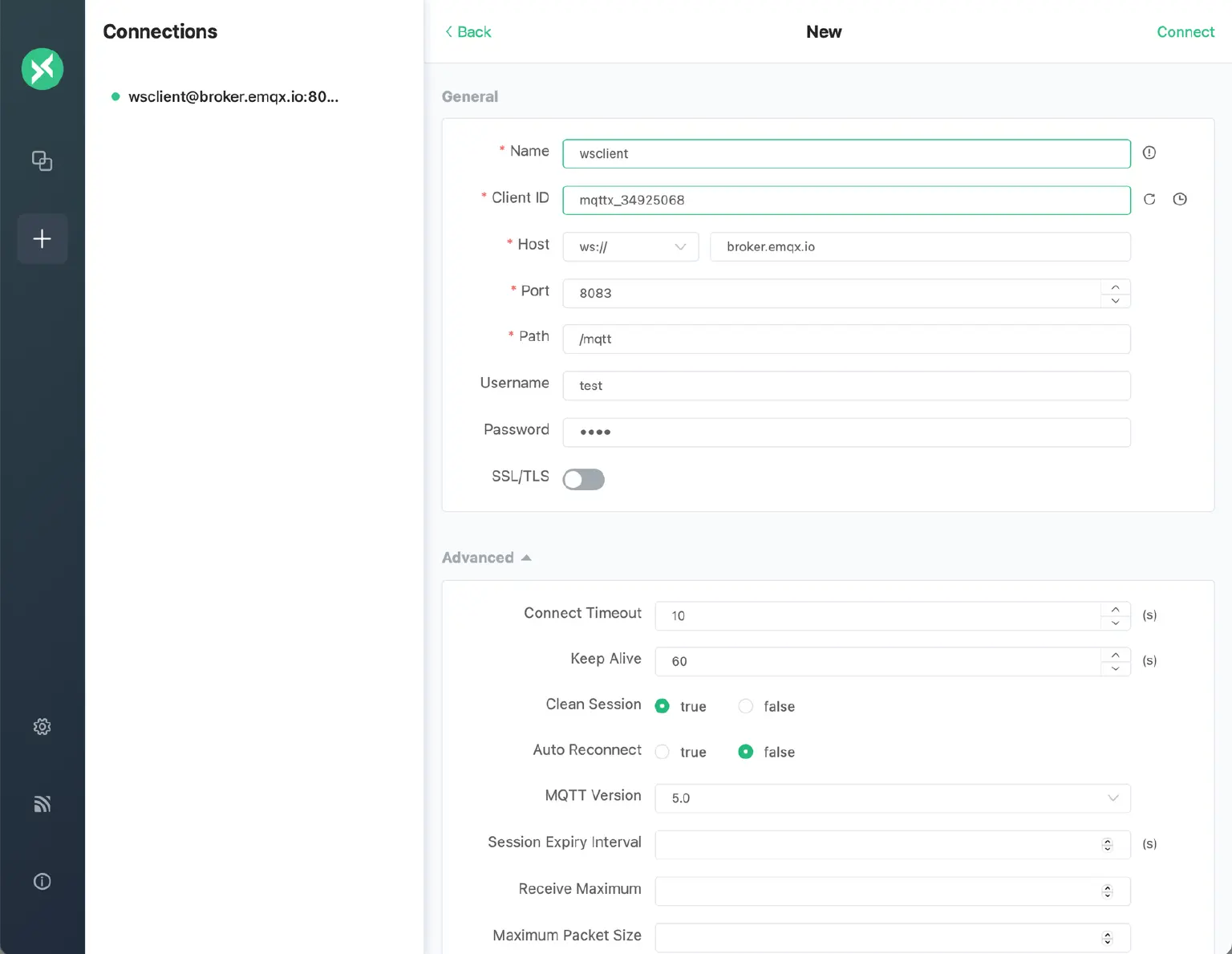
- Create an MQTT connection using WebSocket:
- Subscribe to an MQTT topic and publish messages to the topic:
3. Paho JavaScript Client
The Paho JavaScript Client is an MQTT browser-based client library written in Javascript that uses WebSockets to connect to an MQTT Broker.
Paho MQTT is an open-source MQTT client that implements MQTT 3.1.1, developed by the Eclipse Foundation. However, the project has not been actively maintained and has had few updates in recent years.
Official Website: https://www.eclipse.org/paho/index.php?page=clients/js/index.php
GitHub Project: https://github.com/eclipse/paho.mqtt.javascript
Features:
- MQTT 3.1.1 and WebSocket support
- SSL / TLS support
- Message Persistence
- Automatic Reconnect
Usage Example
Please check out the project README for examples of usage.
Wrap up
For debugging and testing, MQTTX Web is an excellent, no-install option. For building web applications, MQTT.js stands out as the most robust and actively maintained MQTT WebSocket client library. While the Paho JavaScript Client is a viable choice, its less frequent updates make it less ideal for new projects.
Ultimately, your choice of client tool or library depends on your specific needs—whether you're prototyping, debugging, or building a full-scale web application. By leveraging a free MQTT broker like EMQX, you can get your projects off the ground quickly and cost-effectively, empowering you to focus on what matters most: building great IoT applications.
Related Resources
- A Quickstart Guide to Using MQTT over WebSocket
- MQTT vs WebSocket: Key Differences & Applications
- Online MQTT Client - MQTTX Web
- Top 3 MQTT WebSocket Clients in 2025
- JavaScript MQTT Client: A Beginner's Guide to MQTT.js
- How to Use MQTT in Vue
- How to Use MQTT in React